





+49 5402 96526-10 Mon-Fr 9a.m.-6p.m.
Email mail@trailer.one
Address
How to identify trailer parts correctly: repairing the wheel brake
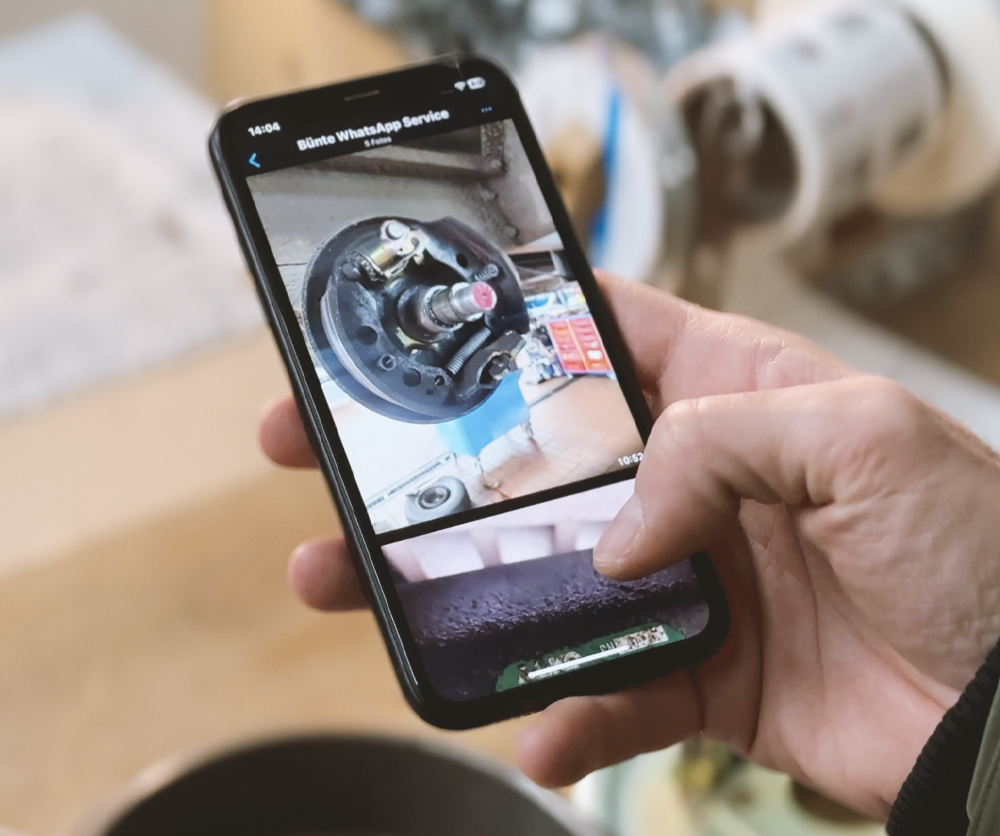
Many of you will know the problem: the wheel brake on your trailer needs servicing or repair, but the crucial question is: Which type of wheel brake is installed and which spare parts do I need?
Given the large number of axle brakes, types, manufacturers, load classes and production years, finding the correct spare parts can quickly become a challenge. In this article, we show you a structured approach to identifying the required information – even if you no longer have any documentation.
1. The primary source of information: the axle type plate
The most efficient way to identify the wheel brake starts with the axle type plate. This plate is usually attached to the centre of the axle body, either riveted or glued in place.
-
The ideal case: Sometimes the wheel brake type is stated directly on the plate.
-
The ETI number: Manufacturers such as AL-KO often include the spare parts identification number (ETI). This number provides very precise information about the installed brake system and the required spare parts.
-
Alternative details: If the brake type is not stated directly, the permitted axle load, the manufacturer and the axle type number can still help. With this information, your specialist dealer or trusted workshop (for example via WhatsApp or email) can usually assist you further.
2. Precise identification: the backing plate
If the axle type plate is illegible or does not provide enough detail, take a look at the backing plate. It is located on the rear side of the brake drum and is an important source of information.
The following details are typically embossed or stamped onto it:
-
Manufacturer and part number.
-
In many cases, the exact wheel brake type is also marked here. Check the area around the brake cable entry, the edge or the outer side of the plate.
-
Indicator of automatic adjustment: Look out for red protective caps on the backing plate. These are a strong indication that the wheel brake has an automatic adjustment system, which must be taken into account when ordering spare parts.
If you can find the wheel brake type on the backing plate, reliable identification of the brake system and the corresponding spare parts is usually guaranteed.
3. The final option: visual inspection and measurement
If neither the axle type plate nor the backing plate provides usable information – for example with very old or heavily worn trailers – then visual inspection and measurement remain the final option. In this case, collect as much measurable and visual data as possible:
-
Photos: Document the wheel brake and its individual components in detail, both assembled and dismantled.
-
Brake drum diameter: Measure the diameter of the brake drum (e.g. 200 mm).
-
Brake shoe width: Measure the width of the brake shoes or brake linings (e.g. 50 mm).
-
Manufacturer: Look for an embossed manufacturer marking on the brake shoes or other components (e.g. AL-KO).
Send all collected information – photos, measurements (diameter and width) and any manufacturer names you find – to your dealer. Although these measurements cannot provide an absolute guarantee due to variations (such as different bearings or brake drum heights), they are extremely helpful for the final identification process.
Summary
To reliably identify the wheel brake on your trailer, follow these steps:
-
Check the axle type plate.
-
Check the backing plate for the embossed wheel brake type.
-
Carry out a visual inspection and measurement of the brake drum diameter and brake shoe width.
Collect this information carefully and forward it to your specialist dealer. This will help ensure that the correct spare parts are ordered and that the operational safety of your trailer is restored.
Recent posts
- More sales, less effort: why you should join the Trailer.One B2B marketplace as a dealer
- Jockey wheel tests under scrutiny: why the stated nose weight is only half the story
- Milestones, myths & crises: the history of Westfalia trailers
- Overrun brake on a trailer: when to repair and when to replace?
- Trailer brake technology: original parts or aftermarket replacements?
- Spring Release 2026 is live! Lots of useful improvements are waiting for you
- Unboxing the THOR WINCH T-X9500: a reliable winch from Scandinavia
BÜNTE Marketplace GmbH
Gewerbepark 18
49143 Bissendorf | Germany
Phone: +49 5402 96526-10
Mail: mail@trailer.one
Mon.–Thur.: 8.00 a.m.–5.00 p.m
Fri.: 9.00 a.m.–2.00 p.m.
© 2022 - 2026 Bünte Marketplace GmbH.