






+49 5402 96526-10 Mon-Fr 9a.m.-6p.m.
Email mail@trailer.one
Address
Winter tyre requirements for trailers: what actually applies?
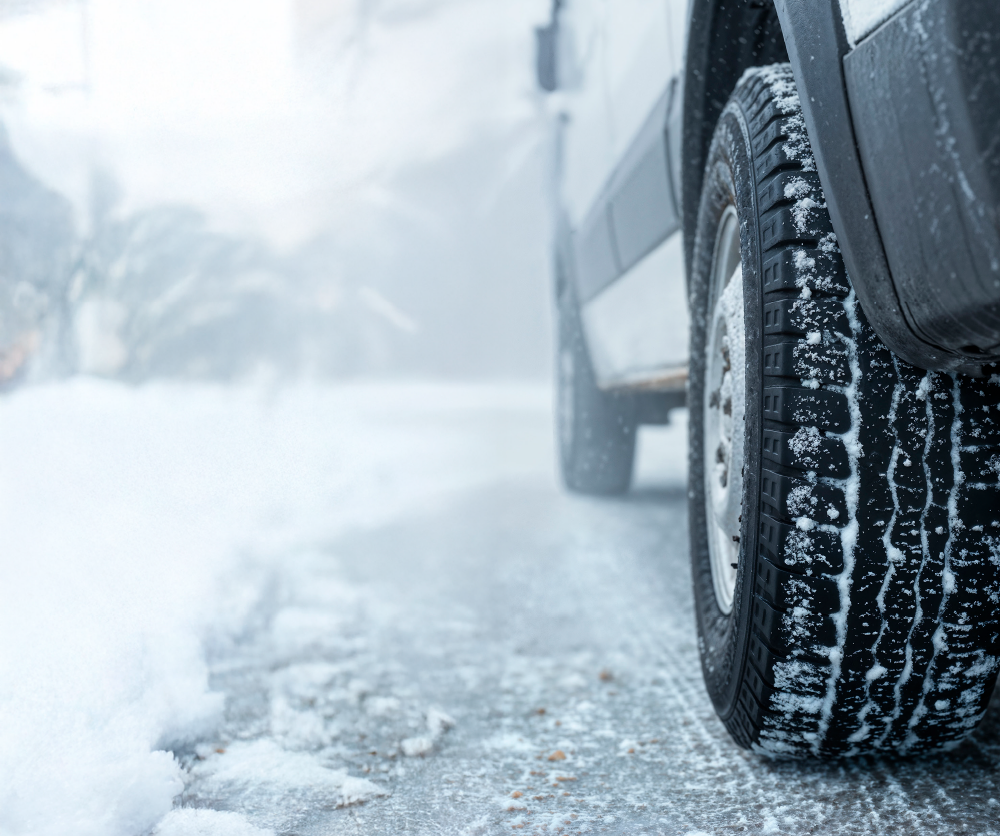
Germany’s winter tyre regulations continue to cause confusion – especially when it comes to trailers. Do trailers need their own winter tyres? Which symbols matter? And what should you keep in mind if your trailer is used during winter? Here are the answers.
Symbols and markings
For a long time, tyres marked with the M+S symbol (Mud and Snow) were considered winter tyres. However, since 2018, this is no longer sufficient. Since then, new winter tyres must carry the 3PMSF symbol (Three Peak Mountain Snowflake) – recognisable by the stylised mountain with a snowflake.
There is also a new regulation for all-season tyres: from 1 October 2024, they may only be sold as suitable for winter use if they also carry the 3PMSF symbol. This ensures that the tyres are genuinely suitable for snow and icy conditions.
Does the requirement also apply to trailers?
Germany applies a situational winter tyre requirement. However, this only applies to driven wheels on motor vehicles. Car trailers and caravans up to 3.5 tonnes are exempt from this rule. They are therefore not legally required to be fitted with winter or all-season tyres, regardless of weather conditions.
"The situational winter tyre requirement in Germany does not apply to car trailers and caravans."
Technical tips for trailer users
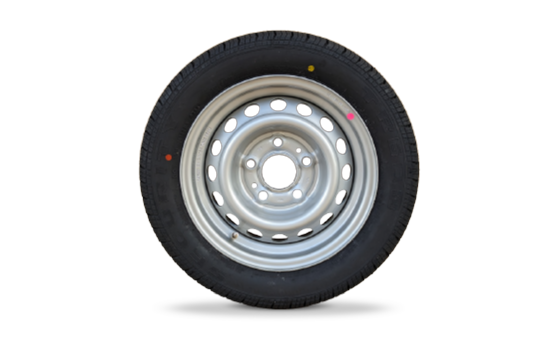
In most cases, standard tyres are technically sufficient, and winter tyres are not necessary. When driven sensibly, car trailers and caravans generally follow the towing vehicle without major issues, even in winter road conditions.
All-season tyres may still be worth considering if the trailer is frequently used in winter conditions. They generally provide adequate safety in most weather conditions and are designed for year-round use. Like winter tyres, all-season tyres are also marked with the 3PMSF symbol.
For cost reasons, many trailer tyres still do not carry the official 3PMSF symbol and instead continue to display the M+S marking. Manufacturers do this to avoid certification costs that would otherwise have to be passed on to customers, even though the certification is not legally required for trailers. Therefore, it is not possible to make a qualified statement as to whether these tyres meet the 3PMSF standard.
In our view, factors such as loading, driving style, tread depth and the age of the trailer tyres are more important than discussions about the correct symbols.
Minimum tread depth and tyre age
As with passenger cars, the legal minimum tread depth for trailers is 1.6 millimetres. However, if travelling in winter conditions, it is advisable to have at least 3 to 4 millimetres of tread.
For trailers and caravans, two additional factors often play an important role: the age and overall condition of the tyre. Particularly in the private sector, trailers are often left standing for long periods, which can significantly affect tyre condition. If a trailer is stored for a long time while loaded, the tyre condition may deteriorate considerably, even if the tyres are not particularly old. In such cases, a good (new) summer tyre may be a sensible option.
Purchasing
Winter and all-season tyres for trailers are usually special-order items, so depending on the size, you should allow approximately 1–2 weeks delivery time.
Conclusion
Trailers and caravans are exempt from the legal winter tyre requirement in Germany, and from a technical perspective, winter tyres are generally not necessary for trailers either. Nevertheless, it is still worthwhile choosing the right tyres carefully. For some drivers, all-season tyres can be a good solution.
By focusing on quality tyres and sufficient tread depth, you can ensure that your trailer remains reliable and safe on the road during winter.
Recent posts
- More sales, less effort: why you should join the Trailer.One B2B marketplace as a dealer
- Jockey wheel tests under scrutiny: why the stated nose weight is only half the story
- Milestones, myths & crises: the history of Westfalia trailers
- Overrun brake on a trailer: when to repair and when to replace?
- Trailer brake technology: original parts or aftermarket replacements?
- Spring Release 2026 is live! Lots of useful improvements are waiting for you
- Unboxing the THOR WINCH T-X9500: a reliable winch from Scandinavia
BÜNTE Marketplace GmbH
Gewerbepark 18
49143 Bissendorf | Germany
Phone: +49 5402 96526-10
Mail: mail@trailer.one
Mon.–Thur.: 8.00 a.m.–5.00 p.m
Fri.: 9.00 a.m.–2.00 p.m.
© 2022 - 2026 Bünte Marketplace GmbH.