






+49 5402 96526-10 Mon-Fr 9a.m.-6p.m.
Email mail@trailer.one
Address
Identifying Wheel Brakes on Car Trailers: Tips You Need to Know
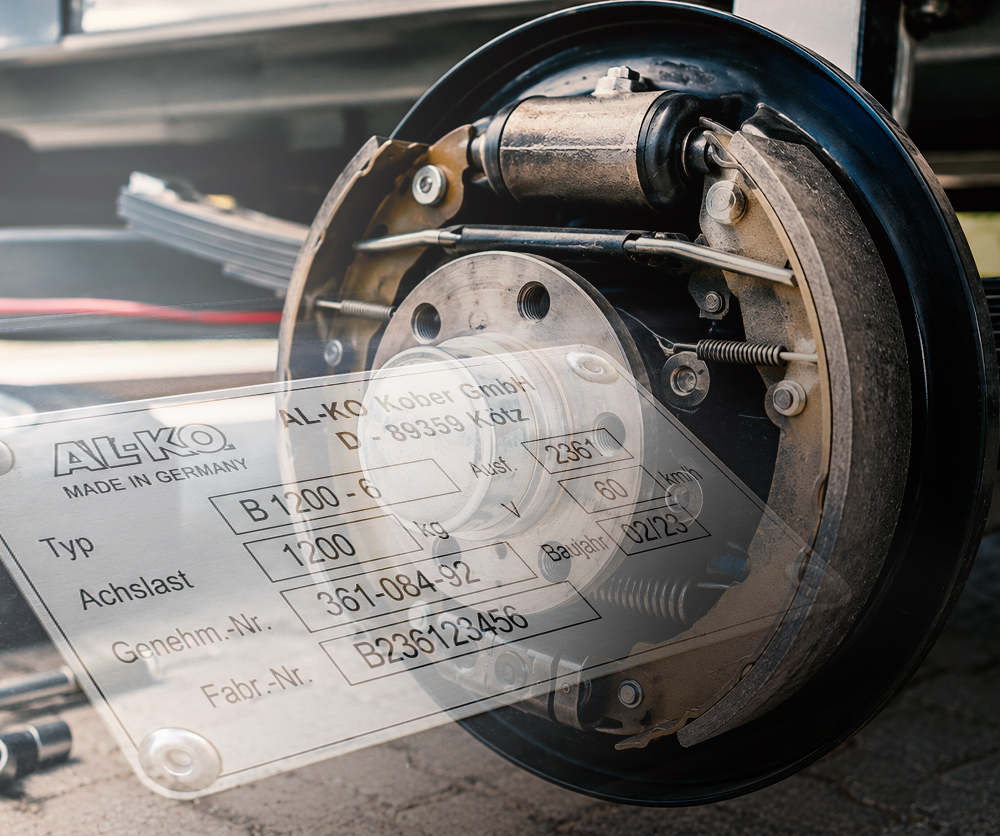
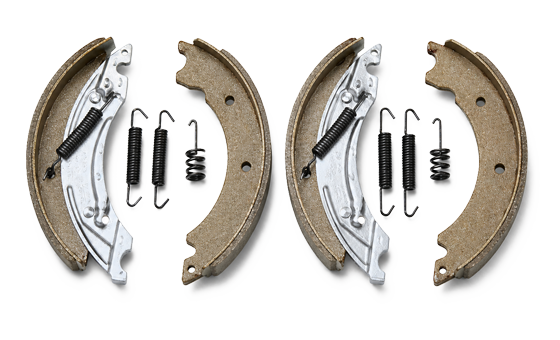
The brakes on your car trailer are worn out, and it's time to replace the brake shoes. But if you want to order the right replacement parts, you often face a problem: The vehicle documents state the manufacturer of the trailer (e.g., Humbaur, Böckmann, or Eduard), but not the exact wheel brake installed.
Since trailer manufacturers usually buy chassis components from large suppliers, you have to figure out for yourself which system is working inside your brake drum. In this guide from trailer.one, we show you the most important tricks to avoid mistakes when ordering.
Common Mistake: Looking at the Drawbar
The most common mistake when identifying the brake happens right at the front of the trailer. Many owners look at the type plate on the overrun device (e.g., AL-KO or Knott) and blindly order brake shoes from the same manufacturer.
Caution: The overrun device and the wheel brake do not necessarily have to come from the same manufacturer! It is entirely possible that a trailer is equipped with a Knott overrun device, but the draw tube controls brakes from AL-KO or BPW. So, looking at the drawbar is not enough. You have to look directly at the wheel.
Step 1: Find the Type Plate on the Axle
The safest method is to check the axle type plate. This is usually located in the middle of the axle tube.
- For AL-KO axles: Look for the 6-digit ETi number (usually starts with 811...). With this number, you have clearly identified the system and can call up the correct parts list directly in the shop.
- For Knott, BPW, or WAP: The type of wheel brake is written on the type plate, for example, "Typ 20-2425/1" (a classic Knott type) or "Typ 2051" (AL-KO).
Step 2: Check the Backplate (Brake Shield)
If the type plate on the axle is weathered or unreadable, a look at the back of the wheel helps. The backplate (the solid metal disc on which the brake shoes are mounted and where the brake cable enters) often contains important information.
Many manufacturers stamp the type of wheel brake directly into the metal. If you safely jack up the trailer and clean the plate with a wire brush, you will find the corresponding markings there.
Step 3: Measuring the Dimensions
If all signs and stamps are illegible, you must remove the brake drum. Identification is then based on two simple measurements:
- The inner diameter of the brake drum (in mm)
- The width of the brake lining (in mm)
These two values form the type designation of the brake for almost all manufacturers.
- If the drum measures 200 mm on the inside and the lining is 50 mm wide, it is a 200x50 brake.
- For AL-KO, this is the widely used wheel brake Typ 2051.
- For Knott, the corresponding dimension is called Typ 20-2425/1.
- Other common dimensions are, for example, 160x35, 230x40, or 250x40.
Once you know these dimensions, you have already narrowed down the selection in the spare parts shop to just a few items.
Step 4: Recognizing the "Knott System"
An important trick that saves a lot of confusion: Not everywhere that contains Knott parts actually says Knott on the outside.
The Knott braking system has established itself as a kind of industry standard over the years. Many other axle manufacturers such as Nieper, Schlegl, Avonride, or older BPW models use wheel brakes in certain series that are either identical to the Knott system or originate from Knott.
When you open the drum, you usually recognize this system by the characteristic auto-reverse mechanism: A movable sliding cam on the trailing brake shoe, which is held by a spring. If your brake has the dimensions 200x50 mm and features this mechanism, the standard spare part sets for the Knott system generally fit, even if your axle comes from Nieper, for example.
Summary for Your Order
To identify the wheel brake beyond a doubt, it is best not to rely on guesswork. Check the type plates on the axle, look for stamps on the backplate, or grab a caliper if the drum is already dismantled.
Once you know the dimensions and the manufacturer, you will quickly find the right brake shoe set or fully assembled repair kits, including all required springs, on the trailer.one marketplace.
No posts found
Write a reviewRecent posts
- Identifying Wheel Brakes on Car Trailers: Tips You Need to Know
- The history of Peitz axles: their background and today’s spare parts supply
- More sales, less effort: why you should join the Trailer.One B2B marketplace as a dealer
- Jockey wheel tests under scrutiny: why the stated nose weight is only half the story
- Milestones, myths & crises: the history of Westfalia trailers
- Overrun brake on a trailer: when to repair and when to replace?
- Trailer brake technology: original parts or aftermarket replacements?
BÜNTE Marketplace GmbH
Gewerbepark 18
49143 Bissendorf | Germany
Phone: +49 5402 96526-10
Mail: mail@trailer.one
Mon.–Thur.: 8.00 a.m.–5.00 p.m
Fri.: 9.00 a.m.–2.00 p.m.
© 2022 - 2026 Bünte Marketplace GmbH.