 Main categories Quick access via the main categories
 Complete product range Overview of our complete product range
 Product finderPRACTICAL Find your product in three steps – with the spare parts finder
 Special offersSALE Overview of our limited-time special offers
 Info centre Expert knowledge all about your trailer
 Bulk buyer enquiry Your enquiry – our matching suppliers


+49 5402 96526-10 Mon–Thu: 9:00 am–5:00 pm and Fri: 9:00 am–2:00 pm
Email mail@trailer.one
Address
Jockey wheel tests under scrutiny: why the stated nose weight is only half the story
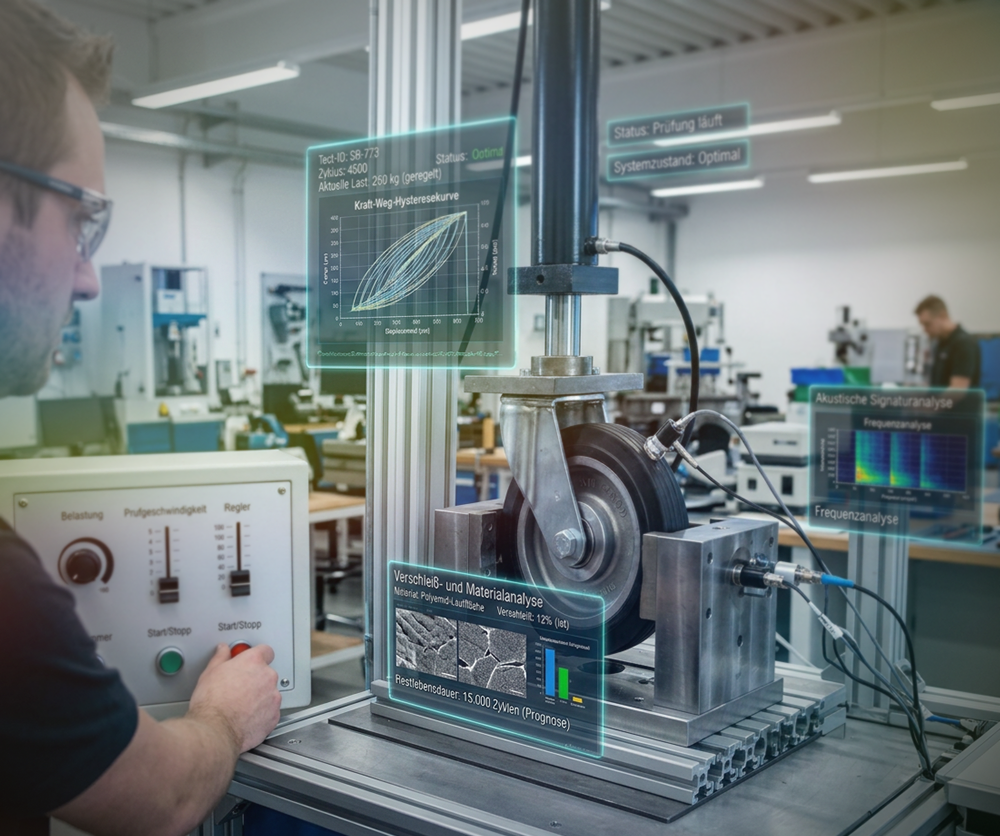
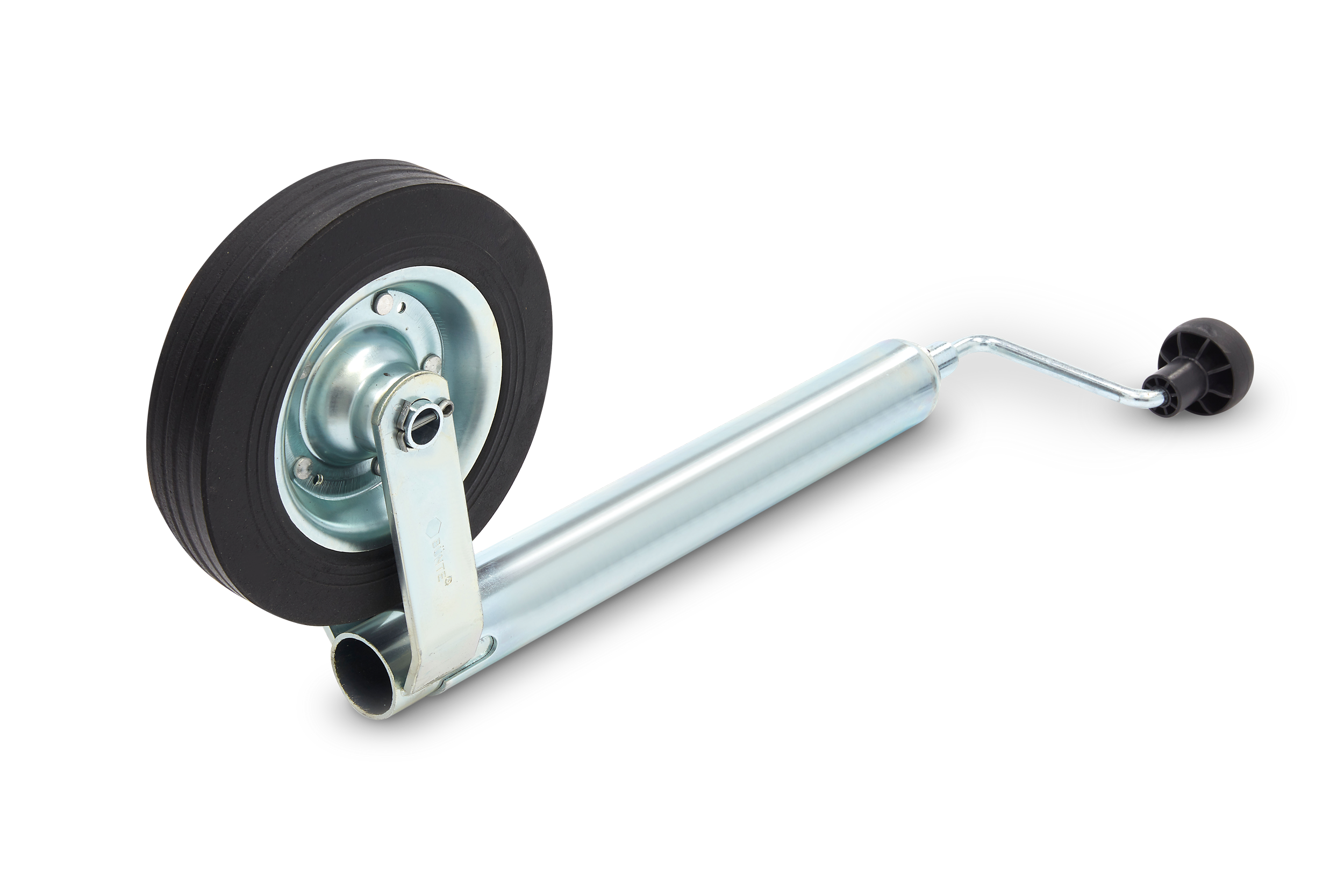
You know the situation: the trailer is fully loaded, you have just uncoupled it from the car and only need to push it “just another two metres” across the yard into the parking spot. You push against the drawbar with all your strength, the small jockey wheel catches in an uneven patch of ground – and with an unpleasant grinding noise, the wheel buckles sideways.
Jockey wheels are among the most underestimated yet heavily stressed components on a car trailer. At Trailer.One, for example, we regularly receive photos of damage from real-life use via our WhatsApp service. One thing stands out: the problem is almost never the weight of the trailer itself, but rather a misunderstanding of the manufacturer’s specifications.
In this article, we explain why so many jockey wheels break during manoeuvring and what you really need to pay attention to when buying one.
Nose weight: static vs dynamic
When buying a new jockey wheel, you will find something in the description such as: “Nose weight 150 kg” (or 250 kg, 400 kg etc.). Many trailer owners think: Great, my drawbar only puts 75 kg on the wheel, so I’ve got loads of reserve capacity!
The misconception: this manufacturer specification almost always refers exclusively to the static nose weight. This means: the trailer is standing completely still on a flat concrete surface.
However, as soon as you start manoeuvring the trailer, everything becomes dynamic. For example, you are pushing a loaded 1.5-tonne trailer across gravel, paving stones or wet grass. The jockey wheel has to rotate as it moves and may get stuck in a small pothole while you continue pushing from the side. Although the full weight of the trailer is not acting on the jockey wheel at that moment, the side and leverage forces are still so strong that the stated nose weight is exceeded many times over.
The weak point: the clamp bracket
Despite the dynamic forces involved, in practice the wheel itself is almost never the issue. The real weak points are further up:
-
The clamp bracket (or “clamp collar”): during heavy manoeuvring, the bracket holding the tube bends. The jockey wheel slips through or suddenly sits crooked.
-
The flange: with automatic jockey wheels directly flanged to the drawbar, the base plate can literally tear off under sideways leverage forces or the bolts may bend.
-
The internal spindle: on cheaper models, the spindle inside the jockey wheel often bends very quickly.
The brand jungle: AL-KO, Knott, DTR and others
If you look around the market, you will come across the major names in trailer technology such as AL-KO, Knott or Winterhoff when it comes to jockey wheels for car trailers. Alongside them are established specialists such as the British brand KARTT. And then there is the huge aftermarket with well-known replica manufacturers such as DTR or Valeryd.
But here comes an open industry “secret” that is often overlooked in tests: most jockey wheels – regardless of the brand – come from exactly the same major production plants in Asia. Whether you buy a wheel with or without a logo does not automatically say anything about its load capacity or quality at first glance. What really matters is not necessarily the logo on the handle, but the exact specifications and quality controls commissioned by the respective importer or manufacturer from the Asian factory.
What you should really pay attention to when buying
- A solid clamp bracket: a thick cast clamp collar instead of thin stamped sheet metal quickly pays off when manoeuvring heavier loads. In the area of 48 mm clamp brackets, there are reasonably priced standard solutions where the base of the bracket is made from cast material. This provides a noticeable increase in stability. The brand does not matter here either.
- In the area of 48 mm jockey wheels, a ribbed jockey wheel is an interesting alternative. It usually weighs less than a comparable 60 mm jockey wheel and withstands lateral forces equally well or even better (personal opinion based on our own experience!). It is important that ribbed jockey wheels are fitted with a specially designed bracket made entirely of cast material. This type of jockey wheel is especially popular in England!
- If you choose a 60 mm jockey wheel with a welded flange (or already have one fitted), we recommend additionally using a jockey wheel brace.
There are many ways to better support a jockey wheel during manoeuvring. In the end, however, one (bitter) truth remains: a trailer is fitted with a “support” wheel, not a “manoeuvring” wheel. In our experience, all suppliers ultimately rely on this argument.
If you are unsure which jockey wheel to choose, we are happy to help!
No posts found
Write a review


Recent posts
- Overrun brake jolting when braking? Here’s how to replace the overrun device damper
- Spare Parts Identification for Trailers: The BPW Part Number as the Equivalent of the AL-KO ETI
- Transformation in the Chassis Market: The Recent History of AL-KO Vehicle Technology
- The ETI Number Explained: The Key to Finding the Right AL-KO Spare Part
- Firewood Season Begins: How to Transport Firewood Safely with a Trailer
- Why Trailer Nets Are Usually Not Enough to Secure a Load
- Chapel Flex-e-Pump Put to the Test: The Perfect Solution for Cordless Drill-Powered Tippers or Unreliable Technology?
TrailerOne GmbH
Gewerbepark 18
49143 Bissendorf | Germany
Phone: +49 5402 96526-10
Mail: mail@trailer.one
Mon.–Thur.: 9.00 a.m.–5.00 p.m
Fri.: 9.00 a.m.–2.00 p.m.

© 2022 - 2026 TrailerOne GmbH.