Categories
Categories
Categories
 Main categories Quick access via the main categories
 Complete product range Overview of our complete product range
 Product finderPRACTICAL Find your product in three steps – with the spare parts finder
 Special offersSALE Overview of our limited-time special offers
 Info centre Expert knowledge all about your trailer
 Bulk buyer enquiry Your enquiry – our matching suppliers




+49 5402 96526-10
+49 5402 96526-10 Mon–Thu: 9:00 am–5:00 pm and Fri: 9:00 am–2:00 pm
Email mail@trailer.one
Address
Germany, Bissendorf, Gewerbepark 18
Firewood Season Begins: How to Transport Firewood Safely with a Trailer
August 21, 2026
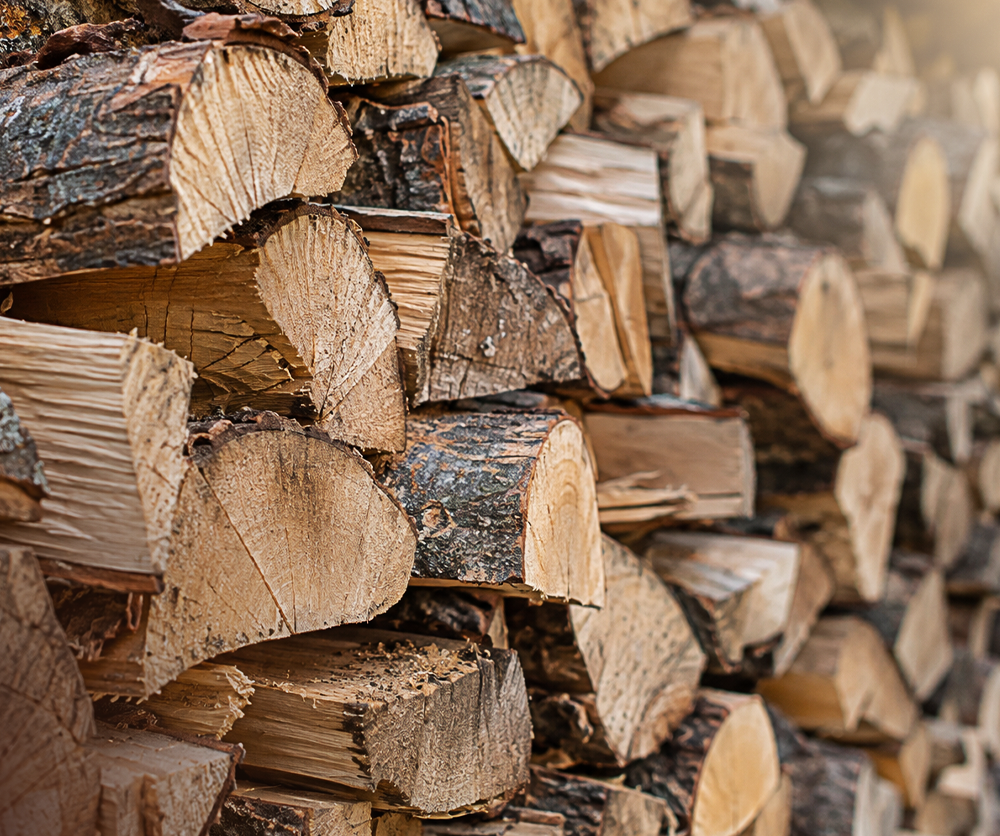
As the days grow shorter and temperatures begin to fall, the most important time of year starts for many firewood owners and wood-burning stove enthusiasts: firewood season. Whether collecting logs directly from the forest or transporting split firewood from a supplier, a car trailer is one of the most practical ways to move it.
Transporting firewood, however, places considerable demands on your equipment. Wood is extremely heavy and awkward to handle, and its weight can vary dramatically depending on its moisture content. To ensure safe transport and prevent damage to your equipment, there are several technical and legal considerations to bear in mind.
1. An underestimated risk: wood weight and overloading
One of the most common mistakes when transporting firewood is misjudging its weight. Fresh, wet wood is considerably heavier than properly seasoned firewood. If you load a trailer up to the top of the side panels with freshly cut oak or beech, you are almost certain to exceed its maximum authorised mass.
As a rough guide to the weight of one cubic metre (m³) of stacked wood:
| Wood type | Dry (approx. 15–20% residual moisture) | Fresh / wet (freshly cut) |
| Beech / oak (hardwood) | approx. 480–520 kg | approx. 750–850 kg |
| Spruce / pine (softwood) | approx. 300–380 kg | approx. 450–550 kg |
Note: one cubic metre of loose, tipped wood weighs approximately 30 to 35% less than the same volume of stacked wood.
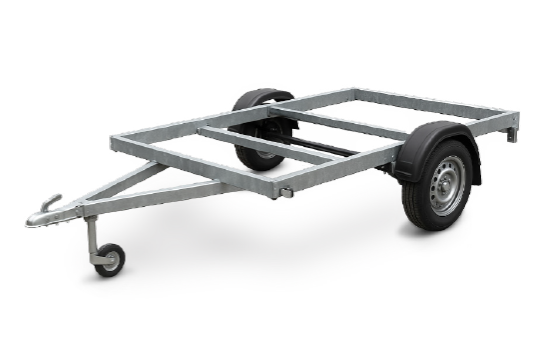
In practical terms: a small, unbraked 750 kg trailer with a payload of around 600 kg can already reach its absolute limit with less than one cubic metre of freshly cut oak. Overloading can not only damage the axles and tyres but may also result in substantial fines and other penalties if you are stopped for a roadside inspection.
2. Braked vs unbraked: safety off-road and on the road
The advantages of an overrun braking system become particularly clear when transporting wood in autumn:
-
Unbraked trailers: these are suitable for smaller quantities of dry firewood on paved roads. On muddy forest tracks or steep downhill sections, however, the full weight of the trailer pushes against the towing vehicle without the benefit of its own braking system.
-
Braked trailers: for regular firewood transport, an overrun braking system is highly recommended. It can significantly reduce stopping distances and helps prevent the car and trailer combination from becoming unstable when cornering or during sudden evasive manoeuvres.
Loading tip: most of the weight should always be positioned directly over the axle or axles. Make sure the permitted nose weight of the towbar is neither too low nor exceeded, as incorrect weight distribution can cause the trailer to snake.
3. Securing the load: nothing must fall onto the road
Wood is subject to legal requirements governing the safe securing of loads. A piece of firewood falling onto an A-road or motorway can pose a potentially life-threatening hazard to following traffic.
Depending on the shape and size of the wood, there are several ways to secure the load correctly:
-
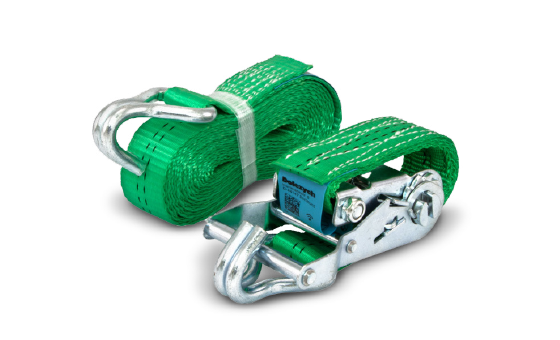
Long logs and timber: these must be securely fastened using approved ratchet straps (make sure the certification labels are intact!) and restrained firmly against the trailer bed and side panels. Suitable lashing points in the trailer floor are essential.
-
Short firewood (loose-loaded): individual pieces of firewood are difficult to secure separately. Side extensions or mesh extensions are ideal for safely increasing the available load volume.
-
Cover nets and tarpaulins: loose loads should always be secured from above using a strong load-securing net or cover tarpaulin, preventing small pieces of bark or firewood from being blown out by the airflow while driving.
4. Autumn check-up: is your trailer ready for use?
Before heading into the forest, it is worth carrying out a quick visual and functional inspection of your trailer. Rough use away from paved roads places additional strain on its components:
-
Tyre pressure & tread: when carrying a heavy load, tyre pressures must be adjusted to the appropriate value specified by the manufacturer. Wet forest tracks also require sufficient tread depth.
-
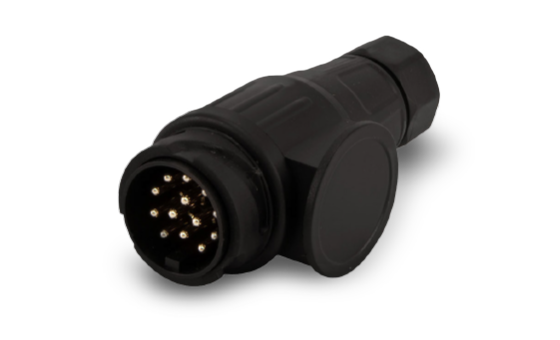
Lights & electrical plug: as it gets dark earlier in autumn, fully functioning trailer lights are essential for safety. Check the plug contacts for corrosion and treat them with electrical contact cleaner if necessary.
-
Wheel bearings & brakes: heavy loads place considerable strain on the wheel bearings. Any unusual noises when turning a wheel or excessive play in the bearings should be investigated and rectified before setting off.
-
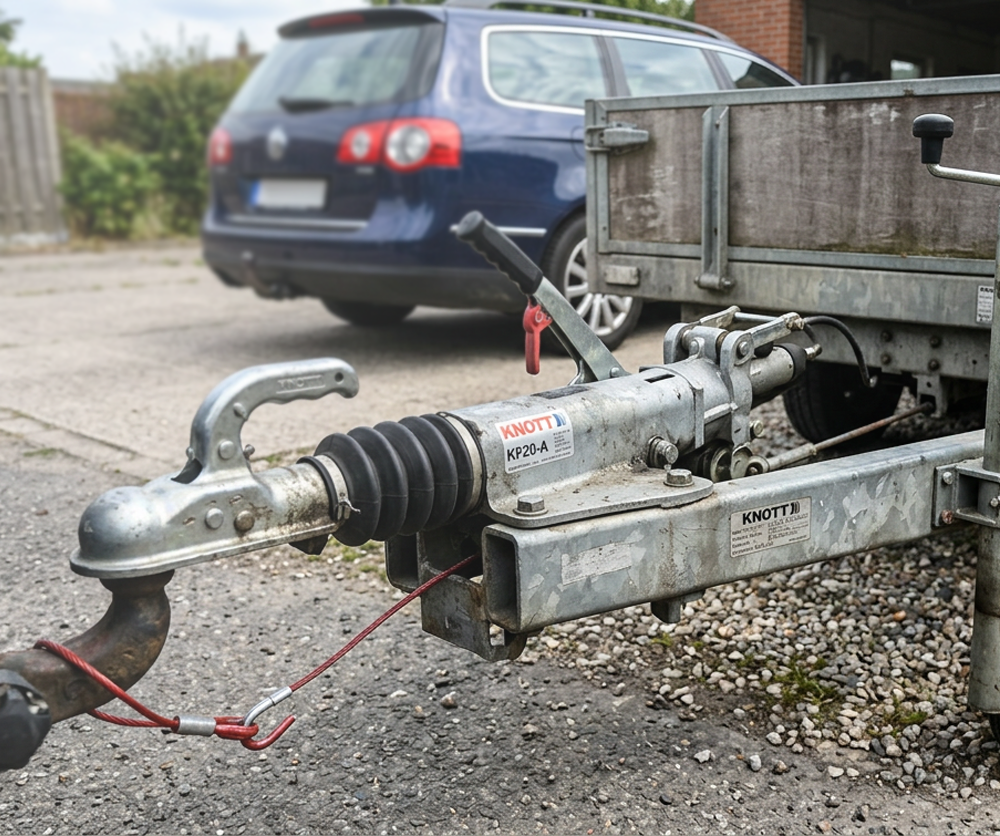
Tow hitch & breakaway cable: check the coupling's wear indicator and make sure the breakaway cable on braked trailers can be attached correctly.
Conclusion
A trailer is the perfect companion for firewood season, provided its load limits are respected and the load is secured carefully. By calculating the weight of different types of wood correctly and keeping your trailer in good mechanical condition, you can transport your firewood safely throughout the autumn.
Completed your transport safety check? If you still need ratchet straps, a suitable cover net, replacement lights or new braking components before the start of the season, the manufacturer-independent parts finder at Trailer.One makes it easy to find the right accessories for your trailer model.
Comments
No posts found
Write a review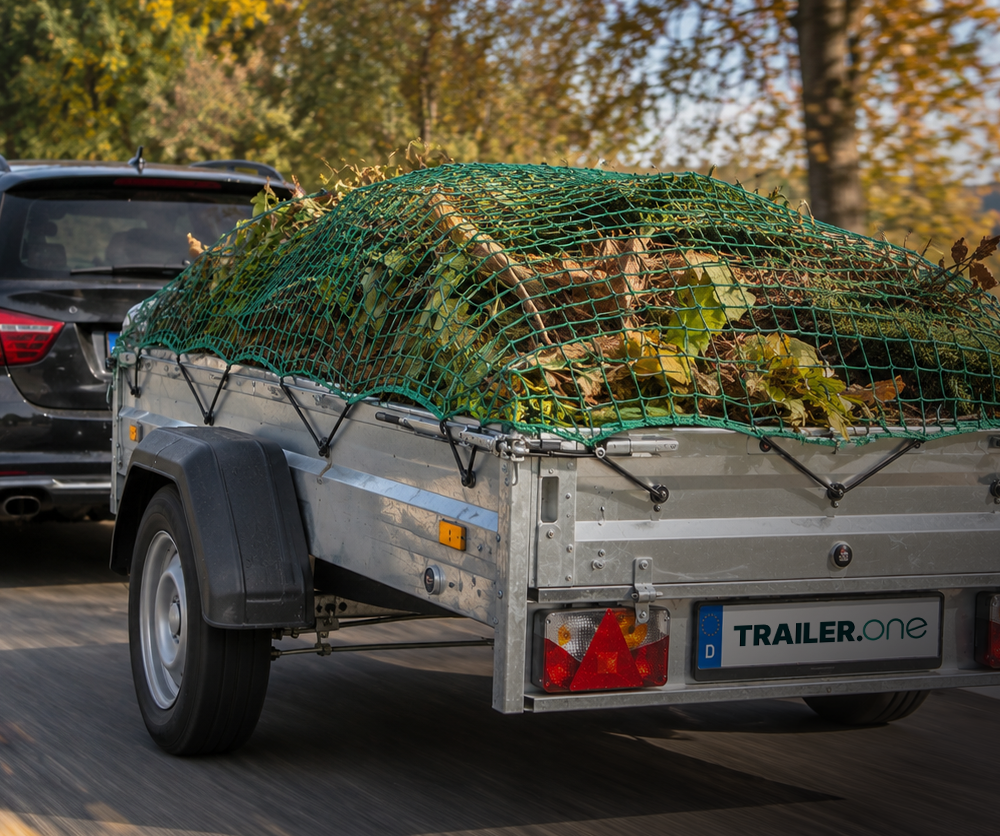






Recent posts
- Firewood Season Begins: How to Transport Firewood Safely with a Trailer
- Why Trailer Nets Are Usually Not Enough to Secure a Load
- Chapel Flex-e-Pump Put to the Test: The Perfect Solution for Cordless Drill-Powered Tippers or Unreliable Technology?
- From an East German Classic to Modern Mass Production: The Evolution of HP Trailers and the STEMA Brand
- Schlegl Axles in Focus: The Solid Alternative for Your Car Trailer
- Identifying Wheel Brakes on Car Trailers: Tips You Need to Know
- The history of Peitz axles: their background and today’s spare parts supply
My account
Information
Customer Service
Contact us
TrailerOne GmbH
Gewerbepark 18
49143 Bissendorf | Germany
Phone: +49 5402 96526-10
Mail: mail@trailer.one
Mon.–Thur.: 9.00 a.m.–5.00 p.m
Fri.: 9.00 a.m.–2.00 p.m.

© 2022 - 2026 TrailerOne GmbH.