 Main categories Quick access via the main categories
 Complete product range Overview of our complete product range
 Product finderPRACTICAL Find your product in three steps – with the spare parts finder
 Special offersSALE Overview of our limited-time special offers
 Info centre Expert knowledge all about your trailer
 Bulk buyer enquiry Your enquiry – our matching suppliers



+49 5402 96526-10 Mon–Thu: 9:00 am–5:00 pm and Fri: 9:00 am–2:00 pm
Email mail@trailer.one
Address
From an East German Classic to Modern Mass Production: The Evolution of HP Trailers and the STEMA Brand
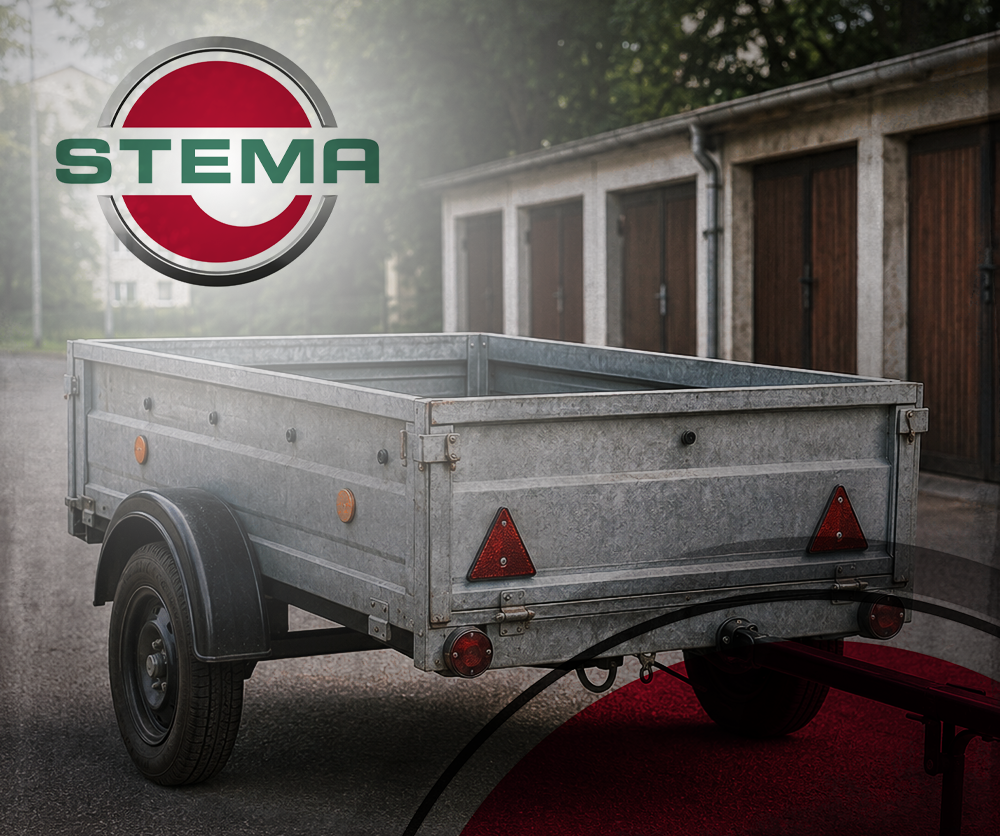
Anyone travelling on German roads encounters them every day: compact car trailers for private or commercial transport. What may appear in today’s traffic as a modern, standard utility item in some cases has a deeply rooted East German industrial history. A prime example is the development of today’s STEMA Metalleichtbau GmbH, whose origins lie in GDR vehicle manufacturing.
The transition from the planned economy of the time to today’s large-scale production shows how design principles and market structures have changed over recent decades.
The Era of GDR Trailers: Pragmatism on Wheels
In the GDR, car trailers fulfilled an important infrastructural role. As private transport capacity was limited by long waiting times for new vehicles and restricted boot space, demand for flexible transport solutions increased.
The best-known production site for this vehicle class was the VEB Stanz- und Emaillierwerk Großenhain in Saxony. From the 1970s onwards, the well-known HP series — particularly the HP 350 and HP 400 — rolled off the production line there. The abbreviation “HP” simply stood for Hochbord-Pkw-Anhänger, meaning high-sided car trailer, followed by the permissible gross weight in kilograms.
-
The design: Typical of many models was the use of independent wheel suspension, in some cases with rubber suspension or torsion bars and additional shock absorbers. This gave the lightweight trailers stable handling, even when unladen.
-
Space utilisation: One pragmatic feature of the HP 350 was the design of the rear section. When garage space was limited, the trailer could be stored vertically on its tailboard.
Thanks to their simple mechanical construction and solid material thicknesses, many of these GDR trailers are still in use today.
Important for owners of GDR classics: Even the most robust technology eventually requires maintenance. As these are historic designs, sourcing parts often differs significantly from modern systems. Anyone looking for specific components such as wheel bearings, ball couplings or lighting systems can find them using the manufacturer-independent GDR trailer spare parts finder on Trailer.one.
The Transformation after 1989: The Emergence of STEMA
With the economic reorganisation that followed the fall of the Berlin Wall, the previous sales market for VEB Großenhain collapsed. In order to survive in the free market, structural and product-related realignment was required.
In 1991, the company was re-established as STEMA Metalleichtbau GmbH, with the name derived as an acronym from the historic terms Stanzwerk and Emaillierwerk.
The transition to the requirements of the market economy involved key steps:
-
Changes in materials and processes: Production was switched to automated processes. Instead of the old sheet-metal constructions, the focus shifted to hot-dip galvanised steel profiles and modular aluminium side panels.
-
Changes in sales channels: The company placed early emphasis on sales through the emerging large DIY and home improvement stores across Germany, which quickly increased production volumes.
Today’s Segment and Market Structure
Today, STEMA is one of Germany’s highest-volume manufacturers in the light car trailer sector. Large-scale industrial production still takes place at the traditional site in Großenhain.
The current market segment differs fundamentally from the beginnings of the HP series:
-
Broader portfolio: Alongside classic entry-level unbraked single-axle trailers (750 kg), the market today primarily includes braked twin-axle trailers, tippers, construction machinery transporters and specialised vehicle transporters.
-
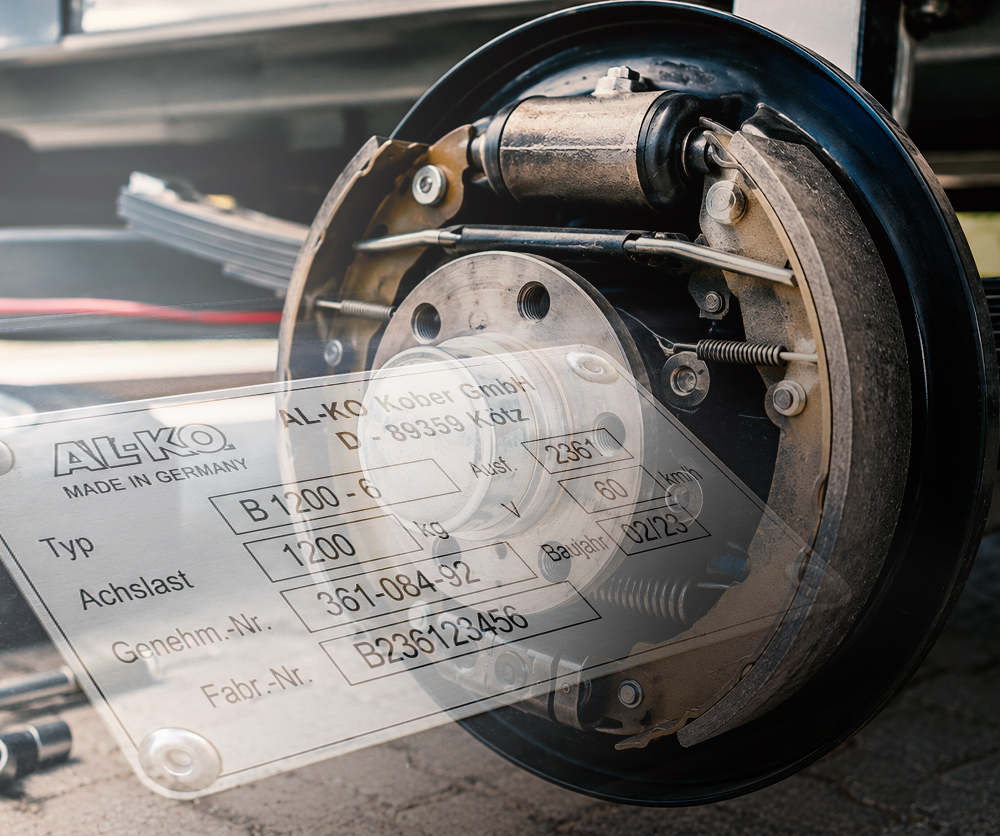
Supplier infrastructure: Modern trailer manufacturers now rely on standardised chassis components from major system suppliers such as AL-KO or Knott. While this makes maintenance easier, identifying spare parts requires close attention to the rating plates of the axle and brake manufacturers.
-
Modular bodies: The focus today is on system accessories — from flexible tarpaulin bodies to mesh side extensions — enabling one and the same chassis to be used for different purposes.
Conclusion: Technical Change, Same Function
The development from a simple GDR utility trailer to a modern mass-produced STEMA product reflects the transformation of the European trailer market. While the old HP models survived as minimalist, durable in-house designs, today’s market is dominated by standardised, modular platforms. For road safety, the same applies now as it did then: regular inspection of axles, brakes and electrics remains the most important factor across all manufacturers.
No posts found
Write a review

Recent posts
- Firewood Season Begins: How to Transport Firewood Safely with a Trailer
- Why Trailer Nets Are Usually Not Enough to Secure a Load
- Chapel Flex-e-Pump Put to the Test: The Perfect Solution for Cordless Drill-Powered Tippers or Unreliable Technology?
- From an East German Classic to Modern Mass Production: The Evolution of HP Trailers and the STEMA Brand
- Schlegl Axles in Focus: The Solid Alternative for Your Car Trailer
- Identifying Wheel Brakes on Car Trailers: Tips You Need to Know
- The history of Peitz axles: their background and today’s spare parts supply
TrailerOne GmbH
Gewerbepark 18
49143 Bissendorf | Germany
Phone: +49 5402 96526-10
Mail: mail@trailer.one
Mon.–Thur.: 9.00 a.m.–5.00 p.m
Fri.: 9.00 a.m.–2.00 p.m.

© 2022 - 2026 TrailerOne GmbH.