 Main categories Quick access via the main categories
 Complete product range Overview of our complete product range
 Product finderPRACTICAL Find your product in three steps – with the spare parts finder
 Special offersSALE Overview of our limited-time special offers
 Info centre Expert knowledge all about your trailer
 Bulk buyer enquiry Your enquiry – our matching suppliers



+49 5402 96526-10 Mon-Fr 9a.m.-6p.m.
Email mail@trailer.one
Address
Overrun brake on a trailer: when to repair and when to replace?
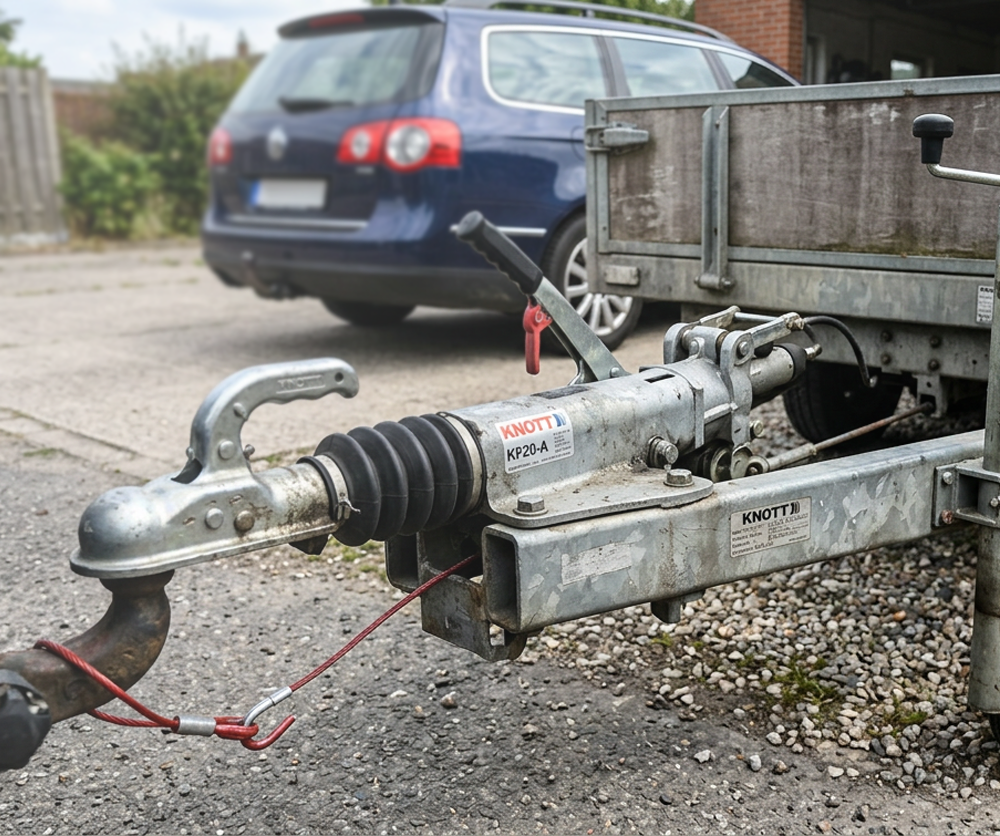
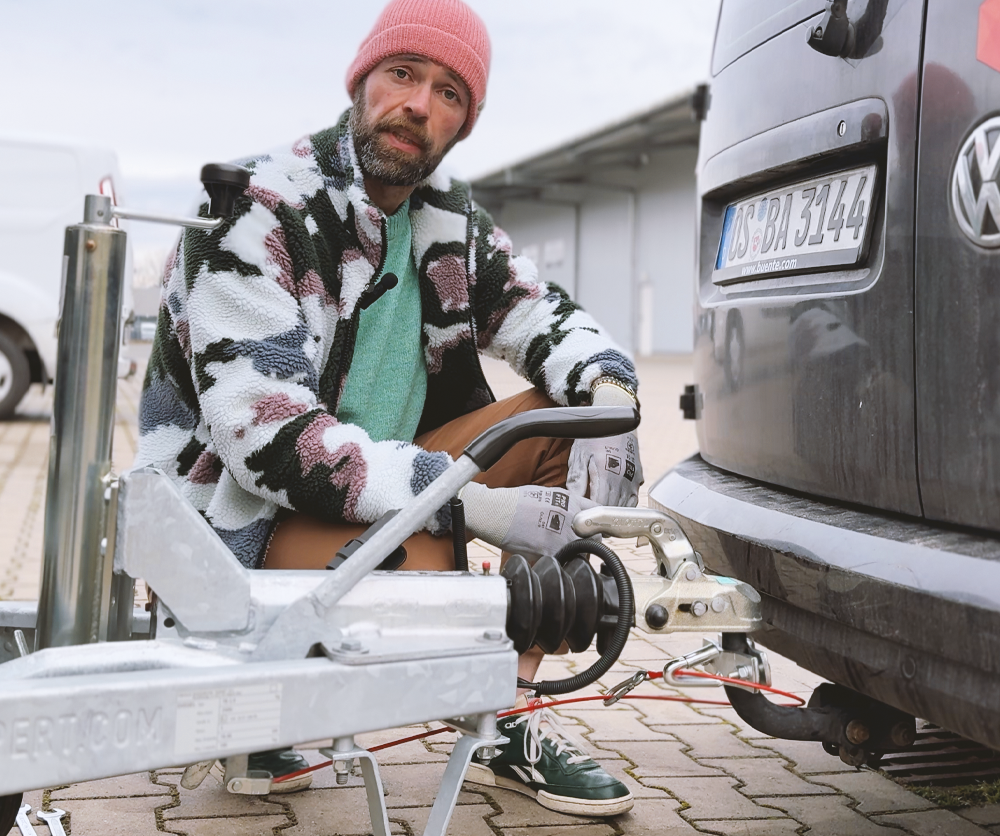
The overrun brake is one of the central safety components of a braked passenger car trailer. It ensures that the trailer’s weight does not push unbraked against the towing vehicle during braking. In everyday use, however, this assembly is exposed to enormous mechanical stress, which inevitably leads to wear and tear over the years.
At the latest when the trailer noticeably jerks during braking, crashes harshly into the towing vehicle, or the inspector identifies defects during the MOT inspection, you as the trailer owner are faced with an economic and safety-related decision: Is a targeted repair of the overrun device worthwhile, or does it make more sense to invest in a completely new unit?
In this guide from trailer.one, we examine the criteria that can help you make this decision.
The economical option: When a repair makes sense
A complete overrun device is expensive. As long as the basic structure – meaning the main housing – is undamaged, a repair is often the more economical solution. The overrun brake consists of several individual parts that are specifically designed as wear parts and can generally be replaced quite easily.
Typical wear parts that can be repaired:
-
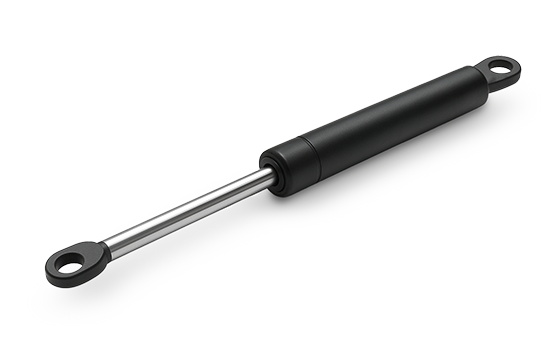
Overrun shock absorber: This dampens the braking process. If it loses its effectiveness, the trailer crashes harshly into the tow ball of the towing vehicle during braking. Replacing the damper is a common routine repair and significantly cheaper than replacing the complete system.
-
Bellows and tow ball coupling: The rubber bellows protects the mechanism from dirt and eventually cracks due to weather exposure. The tow ball coupling wears out through constant friction against the vehicle’s tow ball. Both components are comparatively inexpensive spare parts.
-
Sliding bushes: A certain amount of play in the drawtube is normal, but if it becomes excessive, the tube begins to knock and wear out. By pressing in new sliding bushes and then lubricating the system, this issue can be professionally resolved.
Conclusion regarding repairs: If your trailer is less than 10 to 15 years old, the housing is free from corrosion and only classic wear parts are affected, we recommend a professional repair.
The safe decision: When a replacement is unavoidable
Despite the good availability of spare parts, there are clear limits to repairs. In certain cases, we at trailer.one strongly recommend replacing the entire overrun device for safety or economic reasons.
Criteria for complete replacement:
-
Structural damage and deformation: If your trailer has been involved in an accident, the drawtube is bent, or the housing has cracks, the component must never be straightened or welded under any circumstances. The material has been weakened and must be replaced.
-
Advanced corrosion: If the issue is no longer just superficial rust but deep corrosion damage to the housing, the stability of the braking system can no longer be guaranteed.
-
Economic write-off: If the overrun shock absorber, coupling head, bushes and relay lever are all worn out at the same time, the combined cost of the spare parts plus labour often exceeds the purchase price of a completely pre-assembled new unit.
-
Unavailable spare parts: For very old or rare models (such as old Hahn, Grau, Grümer or Peitz systems), spare parts may no longer be available at all. In these cases, converting to a modern overrun device that is matched to the existing wheel brake is the only technically sound solution.
Summary for your workshop planning
Safety allows no compromises on the road. Before ordering individual parts, you should have the overall condition of the system assessed objectively (or by a professional workshop). Add up the required spare parts and compare the total with the price of a completely new system.
No posts found
Write a review


Recent posts
- Schlegl Axles in Focus: The Solid Alternative for Your Car Trailer
- Identifying Wheel Brakes on Car Trailers: Tips You Need to Know
- The history of Peitz axles: their background and today’s spare parts supply
- More sales, less effort: why you should join the Trailer.One B2B marketplace as a dealer
- Jockey wheel tests under scrutiny: why the stated nose weight is only half the story
- Milestones, myths & crises: the history of Westfalia trailers
- Overrun brake on a trailer: when to repair and when to replace?
BÜNTE Marketplace GmbH
Gewerbepark 18
49143 Bissendorf | Germany
Phone: +49 5402 96526-10
Mail: mail@trailer.one
Mon.–Thur.: 8.00 a.m.–5.00 p.m
Fri.: 9.00 a.m.–2.00 p.m.
© 2022 - 2026 Bünte Marketplace GmbH.