 Main categories Quick access via the main categories
 Complete product range Overview of our complete product range
 Product finderPRACTICAL Find your product in three steps – with the spare parts finder
 Special offersSALE Overview of our limited-time special offers
 Info centre Expert knowledge all about your trailer
 Bulk buyer enquiry Your enquiry – our matching suppliers




+49 5402 96526-10 Mon–Thu: 9:00 am–5:00 pm and Fri: 9:00 am–2:00 pm
Email mail@trailer.one
Address
100 km/h approval for trailers: the key rules
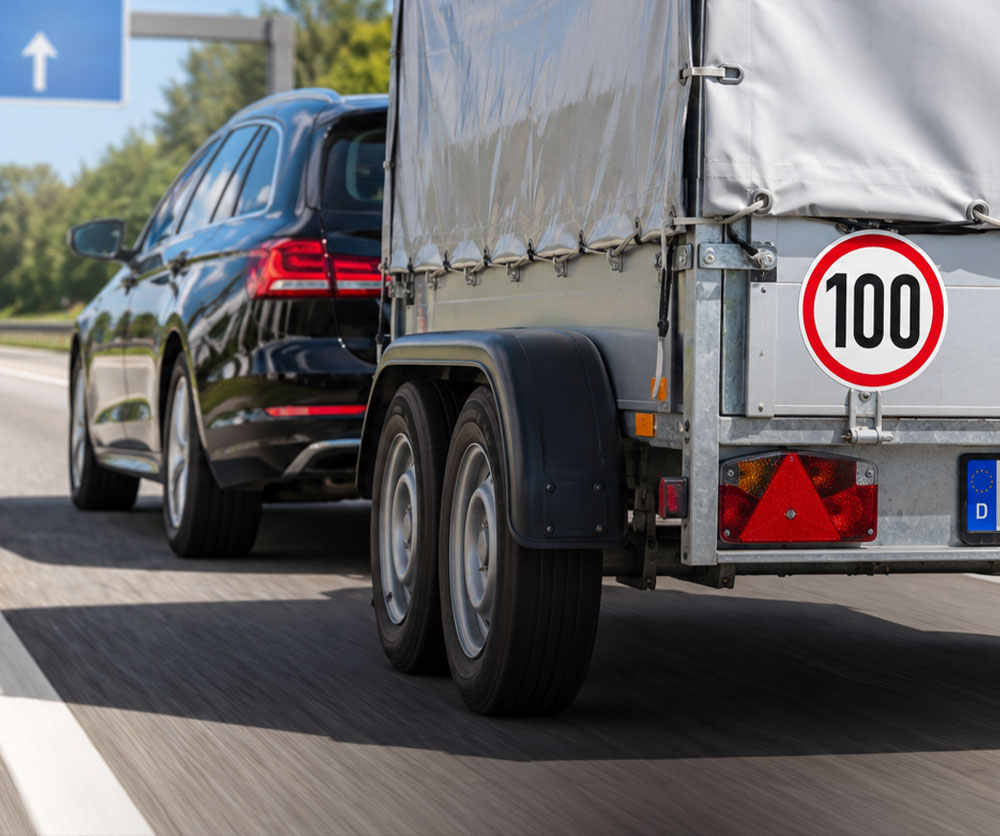
Anyone who regularly visits large communities such as the Anhängerforum will be familiar with the phenomenon: questions about Germany's 100 km/h approval for trailers appear almost every day. At first glance, the regulations can seem complicated, and there is plenty of misinformation about which components actually have to be retrofitted to the trailer.
In this guide from trailer.one, we provide a factual summary of the legal requirements. We explain which technical requirements your trailer must meet and what role wheel shock absorbers and anti-snake couplings actually play.
The basic requirements: Tyres and brakes
Regardless of how heavy your towing vehicle is, your trailer must meet certain basic technical standards to qualify for Germany's 100 km/h approval (under the 9th Exemption Regulation to the German Road Traffic Regulations):
- Tyre age: The trailer tyres must be no more than six years old. The relevant date is determined by the DOT code on the tyre sidewall.
- Speed rating: The tyres must be approved for speeds of at least 120 km/h. This corresponds to speed rating "L" (or higher).
- Brakes: A trailer without its own braking system (e.g. a typical 750 kg trailer) may also qualify for the 100 km/h rule under certain conditions, although the requirements for the towing vehicle are considerably higher.
The mass factor: The towing vehicle makes the difference
One of the biggest misconceptions is that a trailer automatically has a general "100 km/h approval". The sticker on the rear merely indicates that the trailer is technically suitable. Whether you are actually permitted to drive at 100 km/h depends on the unladen weight of your current towing vehicle.
This is where the so-called mass factor comes into play. The trailer's maximum authorised mass must not exceed a certain value calculated on the basis of the car's unladen weight:
- Factor 0.3 (unbraked trailers): The car's unladen weight must be very high. Example: For a 750 kg trailer, the towing vehicle must have an unladen weight of at least 2,500 kg. Fitting wheel shock absorbers to the trailer does not change this factor.
- Factor 1.1 (braked trailers with wheel shock absorbers): This is where it becomes relevant for most users. If the trailer is braked and fitted with wheel shock absorbers, its maximum authorised mass may be up to 1.1 times the unladen weight of the car.
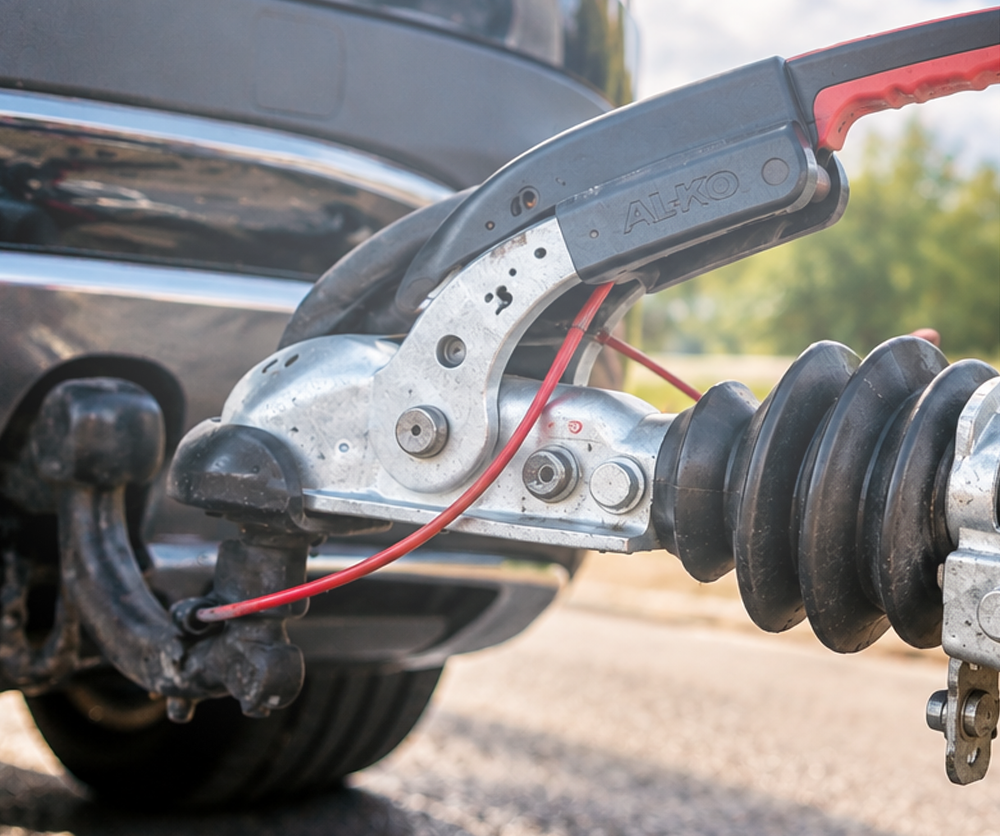
- Factor 1.2 (braked trailers with an anti-snake coupling): If you additionally equip your trailer with an anti-snake coupling (e.g. from AL-KO or Winterhoff), the factor increases to 1.2. Alternatively, this factor also applies if the towing vehicle is equipped with a dedicated ESP system featuring trailer stabilisation.
Retrofitting wheel shock absorbers: Is it worth it?
For most owners of braked trailers, the answer is yes. Without wheel shock absorbers, a factor of only 0.3 applies to braked trailers (the same as for unbraked models). Only by retrofitting shock absorbers does the factor increase to 1.1.
Retrofitting is straightforward on almost all common axles (such as AL-KO, Knott, Schlegl or WAP). Manufacturers usually provide the necessary mounting points on the suspension arms at
No posts found
Write a review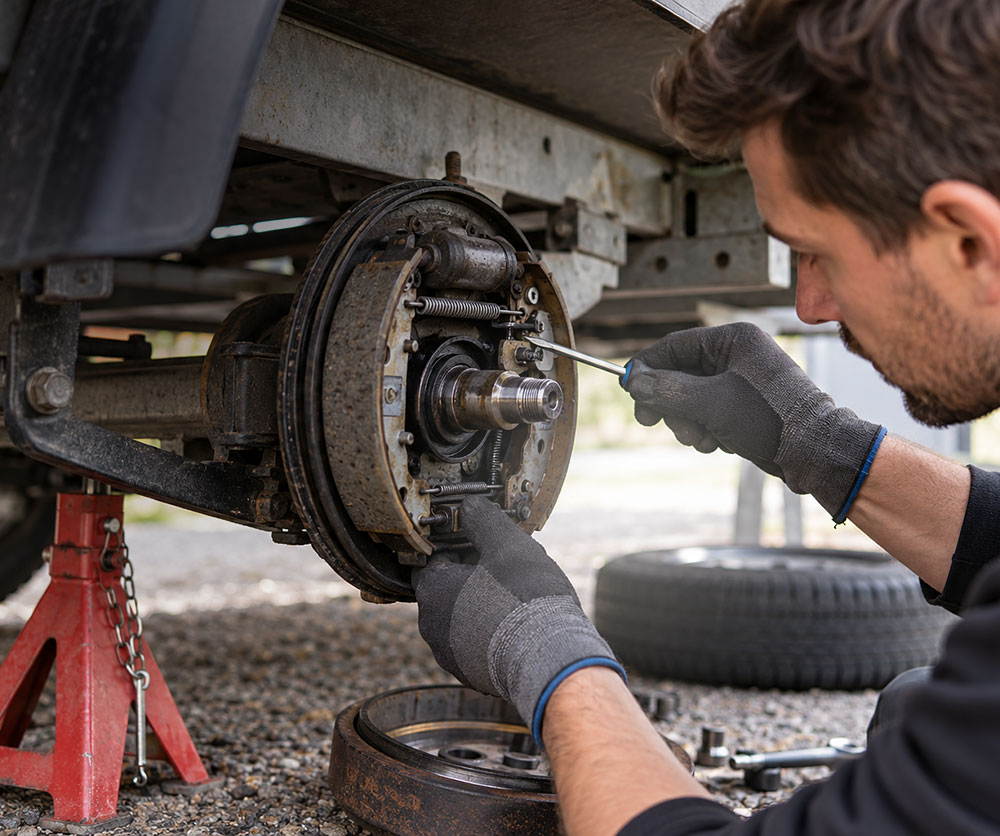




Recent posts
- 100 km/h approval for trailers: the key rules
- Adjusting trailer brakes correctly: the most common mistake and how to avoid it
- Overrun brake jolting when braking? Here’s how to replace the overrun device damper
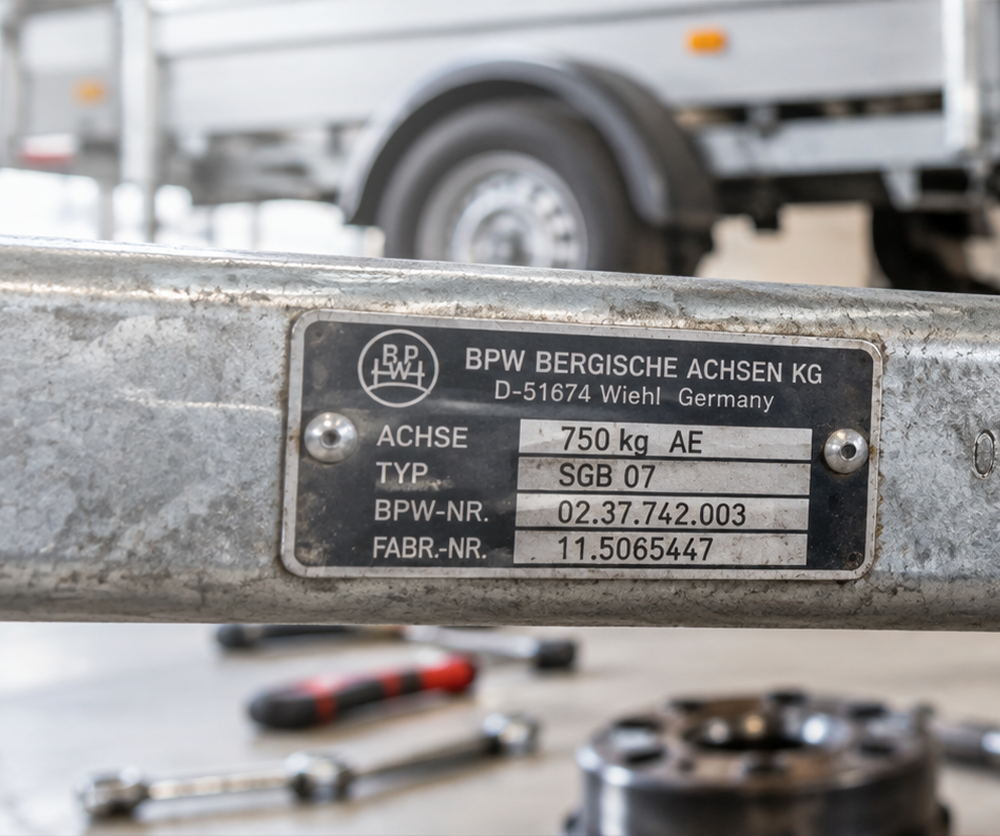
- Spare Parts Identification for Trailers: The BPW Part Number as the Equivalent of the AL-KO ETI
- Transformation in the Chassis Market: The Recent History of AL-KO Vehicle Technology
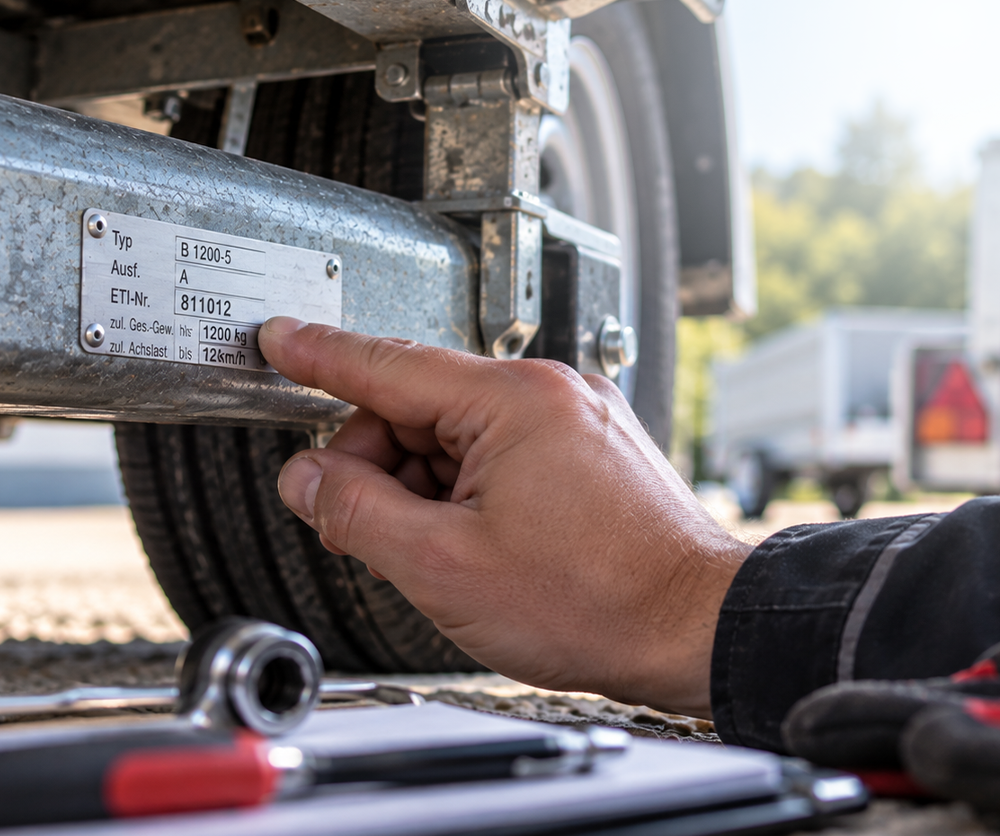
- The ETI Number Explained: The Key to Finding the Right AL-KO Spare Part
- Firewood Season Begins: How to Transport Firewood Safely with a Trailer
TrailerOne GmbH
Gewerbepark 18
49143 Bissendorf | Germany
Phone: +49 5402 96526-10
Mail: mail@trailer.one
Mon.–Thur.: 9.00 a.m.–5.00 p.m
Fri.: 9.00 a.m.–2.00 p.m.

© 2022 - 2026 TrailerOne GmbH.